
How HOA Boards in Novi, MI Can Resolve Community Disputes Before They Escalate
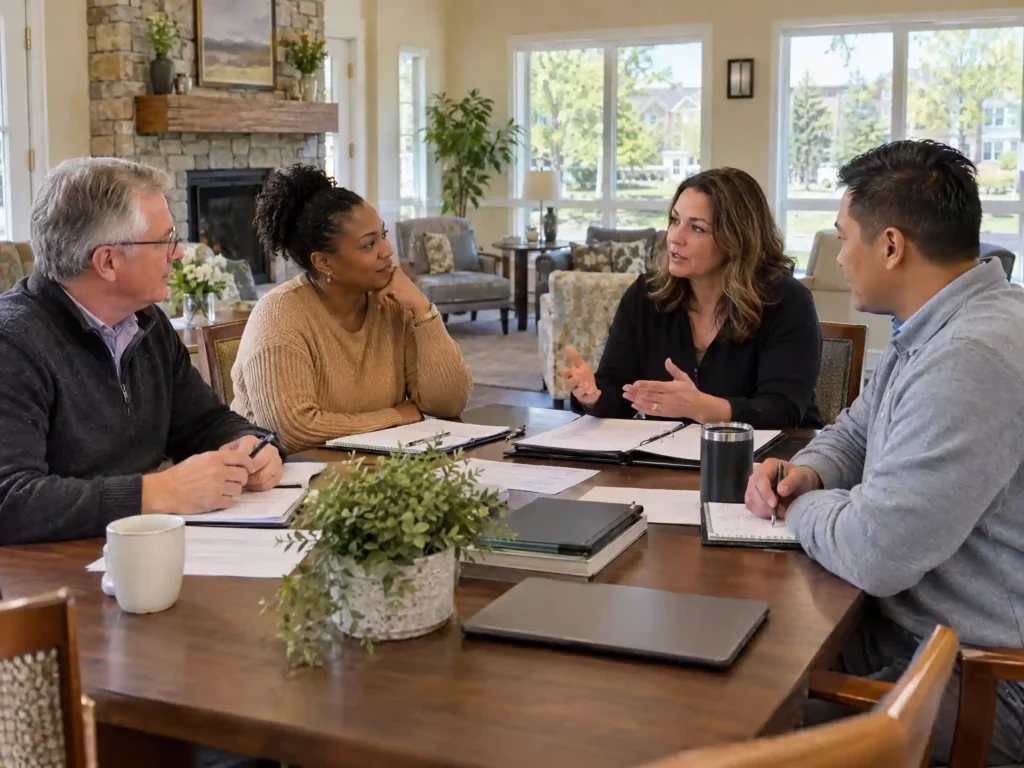
Living in a community means sharing more than a street, a building, or a set of common spaces. It means sharing decisions with people who may have very different ideas about how things should be done.
One homeowner wants stricter parking enforcement. Another believes the rules are being applied unfairly. A board decides to increase assessments, and residents want to know why. A disagreement over landscaping, noise, pets, or a common-area project starts with a few emails and eventually becomes a problem that everyone seems to have an opinion about.
These situations happen in communities of all sizes. And in many cases, the original issue is only part of the problem. Frustration grows when people feel ignored, decisions aren’t explained clearly, or residents believe the rules are being applied differently to different people.
For HOA and condominium associations in Novi, Michigan, the challenge isn’t to eliminate every disagreement. That’s unrealistic. The goal is to create a fair, consistent way to address concerns before they damage relationships or distract the board from running the community.
Why Small HOA Disagreements Can Become Big Problems
Most community disputes don’t begin with someone intending to cause trouble. Often, they start with a genuine concern that isn’t handled well.
Imagine a resident who repeatedly reports a problem with a shared parking area. They don’t receive an update, so they contact a board member directly. That board member is busy and responds briefly. The resident interprets the response as dismissive and starts raising the issue in community emails.
By this point, the original parking concern may be relatively straightforward to resolve. The bigger problem is that trust has started to break down.
The Community Associations Institute (CAI) has highlighted how clear communication, education, and constructive dialogue can help reduce misunderstandings between homeowners and community associations. Its guidance also recognizes the importance of balancing individual concerns with the interests of the wider community. CAI’s guidance on community association conflict.
For board members, this is an important distinction: resolving a complaint means addressing both the issue itself and the process that led to the frustration.
1. Listen Before Defending the Decision
When a homeowner challenges a board decision, the natural reaction can be to explain why the decision was made.
Sometimes that explanation is necessary. But if the resident feels nobody has listened, even a reasonable explanation may not get through.
Start by letting the person explain the concern without immediately interrupting or arguing over individual details.
Useful questions include:
Can you explain what happened from your perspective?
What part of the decision concerns you most?
Is there information you believe the board may be missing?
What outcome are you hoping for?
Listening doesn’t mean agreeing with every complaint. It means giving the board a better understanding of the issue before deciding how to respond.
CAI’s guidance on difficult community conversations recommends listening carefully, focusing on specific behavior rather than attacking individuals, and identifying practical next steps. See CAI’s advice on reducing community tensions.
A homeowner who feels heard may be more willing to consider an explanation, even if the final decision doesn’t change.
2. Separate Facts From Assumptions
Community disputes can quickly become personal when people begin filling gaps in information with assumptions.
A resident might believe the board awarded a contract because of a personal relationship. A board member might assume a homeowner is deliberately ignoring a rule. Neighbors may share secondhand information that changes as it circulates.
Before reaching a conclusion, establish what is actually known.
Depending on the situation, that could mean reviewing:
The association’s governing documents
Relevant rules and written policies
Previous communications
Meeting minutes and recorded decisions
Vendor proposals or contract terms
Photographs, maintenance records, or other relevant documentation
The purpose isn’t to turn every disagreement into an investigation. It’s to make sure decisions are based on reliable information rather than rumors or personal impressions.
If the association cannot share certain information because it is confidential, the board should explain what it can disclose and why some details cannot be discussed publicly.
Transparency and appropriate confidentiality can coexist.
3. Apply Community Rules Consistently
Few things create resentment faster than the perception that some homeowners receive different treatment from others.
If a community has parking restrictions, architectural requirements, pet rules, or standards for common areas, residents need confidence that those rules are being administered fairly.
That doesn’t mean every situation will have an identical outcome. The facts may differ, and governing documents or applicable law may allow different responses in particular circumstances.
It does mean the board should have a consistent process for reviewing concerns and making decisions.
A sensible approach includes:
Reviewing the applicable rule or governing document.
Confirming the relevant facts.
Giving the affected homeowner an appropriate opportunity to respond.
Following the association’s established procedures.
Documenting the decision and communicating the next steps.
The Community Associations Institute recommends clear procedures, understandable rules, and fair approaches to community governance. Its community association governance resources offer further guidance.
For Novi associations, boards should also check the laws applicable to their particular community type and consult qualified Michigan legal counsel when an issue raises questions about enforcement authority, fair housing, or legal rights.
4. Give Residents a Clear Way to Raise Concerns
Not every homeowner knows how to bring an issue to the board. Some send messages to individual board members. Others raise concerns in social media groups or approach neighbors who may not be responsible for resolving the problem.
Without a clear process, complaints can end up scattered across emails, phone calls, and informal conversations.
A written complaint procedure can help residents understand:
Where to submit a concern
What information to include
Who will review the matter
How the association will communicate updates
When a concern may be referred to the board or a qualified professional
For example, a resident reporting recurring noise could provide the dates, times, location, and nature of the disturbance. That gives the association something specific to review rather than relying on broad statements about a neighbor.
The process should also set realistic expectations. Not every concern can be resolved immediately, and some matters require further investigation.
Even a short acknowledgment can help residents understand that their complaint has been received and that there is a next step.
5. Explain the Reasoning Behind Board Decisions
Sometimes the board has made a reasonable decision, but residents don’t understand why.
Perhaps a landscaping project was postponed to prioritize an urgent repair. Maybe the association selected a contractor whose proposal wasn’t the cheapest but offered a more suitable scope of work. Or the board made a change because of a budget constraint.
When residents only see the outcome, they may draw their own conclusions.
Where appropriate, explain the reasoning in plain language.
For example:
“The board reviewed three proposals for the common-area project. The selected proposal was not the lowest-priced option, but it included the required work and a clearer maintenance warranty. The board considered both cost and the long-term needs of the community.”
That explanation doesn’t guarantee everyone will agree. It does give residents a clearer picture of how the decision was reached.
CAI’s guidance on transparency in community associations discusses how transparent communication can build trust and support confidence in board decisions.
The board should communicate in accordance with its governing documents and applicable law, while protecting confidential information.
6. Know When a Direct Conversation Can Help
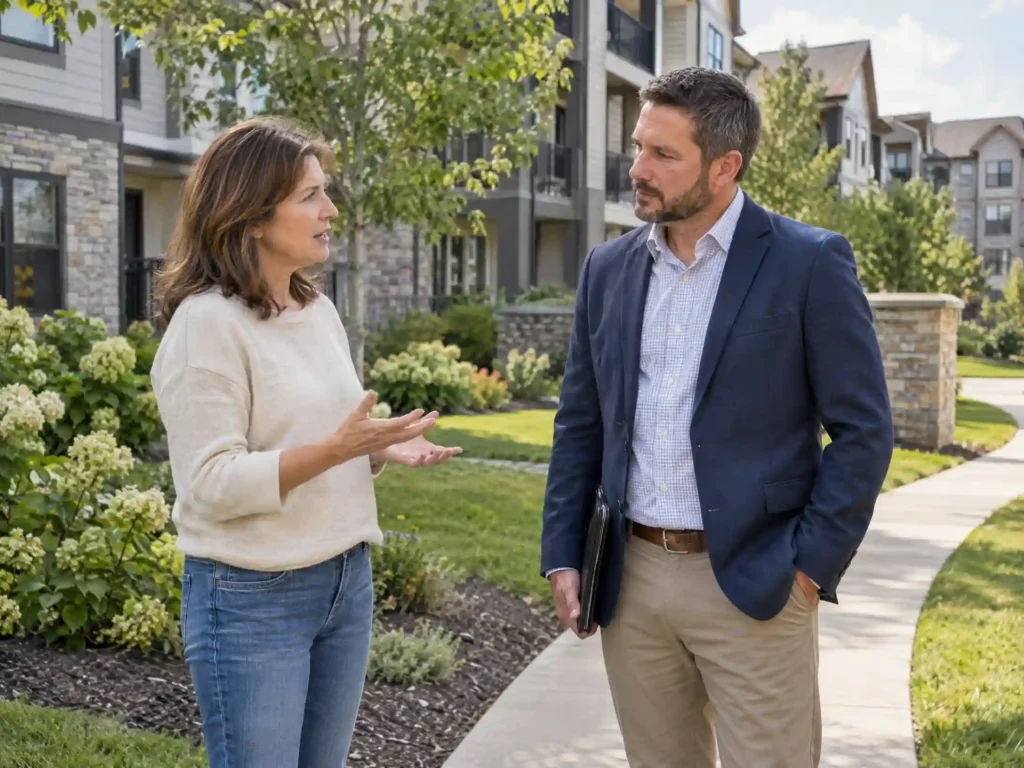
Some disagreements are better handled through a calm conversation than through a long chain of increasingly frustrated emails.
Where appropriate, a board representative or community manager can help clarify what happened, explain the applicable process, and identify a practical way forward.
For example, two residents may disagree about how a shared space is being used. Before the situation becomes a formal complaint, a respectful conversation might help them understand the expectations and agree on a reasonable solution.
However, direct discussion isn’t appropriate for every situation. Allegations involving harassment, threats, discrimination, safety concerns, or other serious matters may require formal procedures or professional advice.
The aim is not to pressure residents into resolving every problem informally. It’s to use the right process for the nature of the dispute.
What if the disagreement cannot be resolved?
Alternative dispute resolution (ADR), which can include mediation, may offer a structured way for parties to work through a disagreement with help from a neutral third party.
CAI discusses ADR as one possible approach for community associations, while recognizing that procedures should be appropriate to the community and consistent with applicable law and governing documents. Learn more through CAI’s alternative dispute resolution guidance.
Boards should seek legal advice when necessary, especially when a dispute involves statutory rights, formal enforcement, or potential litigation.
7. Keep Difficult Discussions Respectful
Board members are often volunteers who have jobs, families, and responsibilities outside the community. Homeowners may also be dealing with personal pressures that have nothing to do with the issue being discussed.
That doesn’t excuse abusive behavior, but it is a reminder that difficult conversations are easier to manage when everyone maintains reasonable boundaries.
A few ground rules can help:
Address the issue rather than attacking the person.
Avoid personal accusations and inflammatory language.
Allow people to finish explaining their concerns.
Keep discussions focused on relevant facts.
Agree on a practical next step before ending the conversation.
Record important decisions and follow-up responsibilities.
CAI’s Community Association Civility Pledge provides a useful framework for encouraging respectful discussions, even when residents strongly disagree.
Boards can establish expectations for meetings and communication without discouraging legitimate questions or criticism.
8. Follow Up After the Conversation
One of the most overlooked parts of resolving a dispute is what happens afterward.
A conversation may end on a positive note, but if nobody follows up, the original problem can return.
Suppose a resident reports a damaged common-area walkway. The manager contacts a contractor, and the board agrees that the work should be inspected. If the resident never receives an update, they may assume nothing has happened.
A simple follow-up can make the difference:
“The contractor has reviewed the reported damage, and we are waiting for a repair proposal. We will provide another update once the board has reviewed the next steps.”
The issue may still take time to resolve, but the resident knows where things stand.
After a dispute, it helps to document:
What was agreed upon
Who is responsible for each action
Any deadlines or review dates
Whether another conversation is needed
What information can be shared with the affected residents
This creates accountability without requiring every interaction to become a lengthy administrative exercise.
How Professional HOA Management Can Help
Volunteer boards carry important responsibilities, but they don’t have to manage every operational detail alone.
A professional management company can help organize communications, document complaints, coordinate meetings, track follow-up actions, and direct issues to the appropriate person.
At Homestead Property Management, services include homeowner communication, meeting oversight, and day-to-day operational support for residential associations across Metro Detroit. These services can help boards maintain more consistent processes and keep important matters from being lost among competing responsibilities. Explore Homestead’s property management services.
A property manager does not replace the board’s authority or serve as a substitute for legal counsel. The role is to support the association within the responsibilities agreed upon in its management contract.
When responsibilities are clear and communication is organized, boards can spend less time chasing information and more time making informed decisions for their communities.
Building a More Respectful Community in Novi, MI
No HOA can guarantee that every resident will agree with every decision. People have different priorities, expectations, and ideas about what makes a community a good place to live.
What boards can do is establish a fair process for listening to concerns, reviewing the facts, applying the rules consistently, and explaining decisions as clearly as possible.
For communities in Novi, Michigan, that approach can help prevent everyday disagreements from becoming lasting conflicts. It can also make board service more manageable and help residents feel that their concerns are being taken seriously.
A healthy community isn’t one without disagreements. It’s one where people have a reasonable way to work through them.
If your HOA board is spending too much time managing resident complaints and communication challenges, Homestead Property Management can help you explore practical support options tailored to your community. Learn more about Homestead’s services in Novi, MI.